
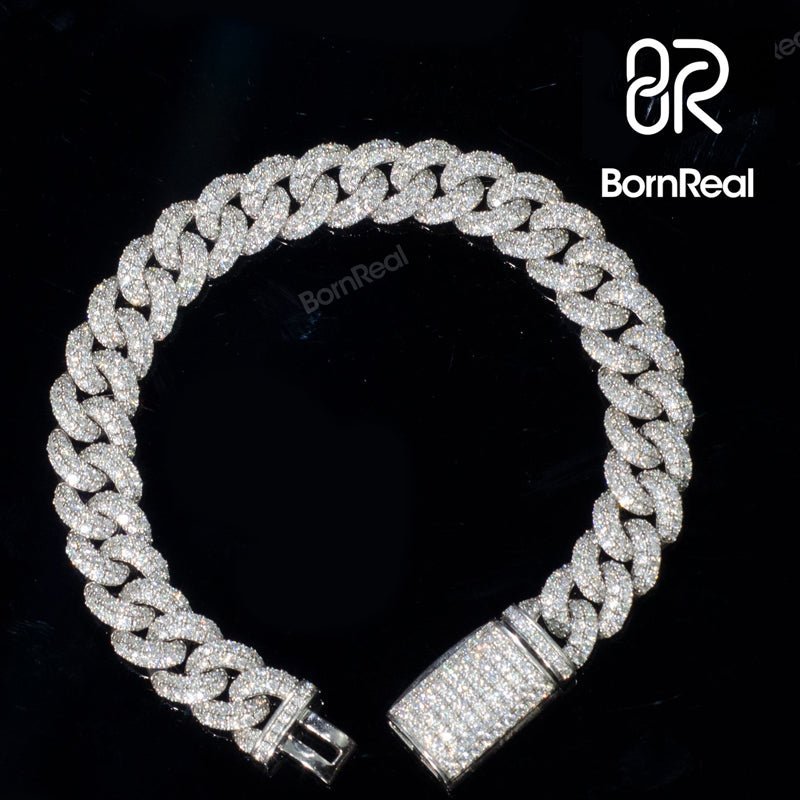
A Cuban bracelet that is too tight will sit up on the wrist and feel stiff; one that is too loose will slide, rotate, and catch on cuffs. Width still matters—see the Cuban width guide—but length is the measurement most people guess. This guide is about measuring your wrist and choosing a bracelet length. It is not medical advice, and it does not replace the size chart on the product you are buying.
Quick answer
- Measure the wrist you will wear the bracelet on, not a necklace you already own and not the other wrist if they differ.
- Use a soft tailor’s tape, or a strip of paper or string that you then lay against a ruler.
- Wrap the tape so it is snug and level, just above the wrist bone (toward the hand is usually too tight; halfway up the forearm is too loose).
- Write down that snug number, then add ease: about 0.5" for a closer fit, or about 0.75"–1" if you want the bracelet to move. Wider, stiffer Cuban links often need a little more ease than a thin tennis bracelet, because the links do not wrap as tightly.
- Match your final number to the bracelet length on the product page, including the clasp.
What you are measuring
Bracelet length is the inside circumference of the closed bracelet—end to end, including the clasp. Your wrist measurement is the circumference of your wrist. The difference between those two numbers is the ease. A listing that also sells necklaces will show necklace lengths (often 18"–24") that are not wrist sizes; do not copy a necklace length onto a bracelet order.


How to measure, step by step
- Clear the wrist. Remove watches and other bracelets. Measure over bare skin, not over a sleeve.
- Position the tape. Sit the tape (or paper strip) just above the wrist bone, keep it level, and overlap the end so you can read a number. The tape should be snug—you should not be able to slide two fingers under it, but it should not pinch or leave a deep mark.
- If you are using paper or string. Mark the overlap, lay the strip flat, and measure the mark with a ruler in inches (or in centimeters, then convert: divide centimeters by 2.54 to get inches). Rounding to the nearest 1/8" or 0.25" is enough.
- Add ease. Start with about 0.5" if you like a bracelet that stays put. Add closer to 1" if you want it to slide a little, if the Cuban is very wide, or if you prefer to wear it over a shirt cuff. If you are between two listed lengths, the longer one is usually the more comfortable daily choice on a stiff Cuban.
- Write the result down and compare it with the bracelet lengths on the listing, not with a friend’s necklace size and not with a “standard” men’s or women’s length.
How width changes the fit
A slim tennis bracelet can follow the curve of the wrist closely. A wide Cuban has thicker links and a larger clasp, so the same ease can feel tighter. If you are choosing both width and length at once, pick the width first (how bold you want the piece), then measure, then add ease with that width in mind. The Cuban bracelets collection and the Cuban link product list current lengths; those numbers can change, so use the page in front of you.
If you are comparing chain styles rather than bracelet length, see Rope vs. Cuban vs. Franco. Tennis bracelets follow a similar ease range (about 0.5"–1") and are covered in the tennis chain buying guide.
Common mistakes
- Using a necklace length. An 18" or 20" chain is a neck measurement. A bracelet is typically only a little longer than your wrist.
- Measuring over a watch or a bunched sleeve. That adds hidden bulk and can push you to a length that then spins on bare skin.
- Pulling the tape as tight as a blood-pressure cuff, or leaving it slack. Snug and level is the starting number; ease is added afterward, on purpose.
- Ignoring the clasp. The clasp is part of the stated length. A bulky box clasp also sits on the underside of the wrist; if you dislike that feeling, say so when you ask for a size check, but do not subtract the clasp from the listed length yourself.
FAQ
Should I measure my dominant hand?
Measure the wrist that will wear the bracelet. Wrists can differ slightly; if you might switch sides, measure both and use the larger result plus ease.
What if I am between two lengths?
On a stiff Cuban, the longer of the two is usually more comfortable for daily wear. If you want it close-fitting and the links are relatively narrow, the shorter length may work—but only after you have added ease to a snug tape measurement, not as a substitute for measuring.
Can you size it from a photo of my wrist?
A photo is not a substitute for a tape measurement. Lighting and camera angle change scale. Send the snug wrist number and the ease you want if you ask the team to double-check a length.
Does this apply to tennis or Franco bracelets too?
The measuring method is the same. The amount of ease can differ with how stiff and how wide the piece is. When in doubt, follow the size notes on that product page.
Browse Cuban bracelets or the Cuban link necklace and bracelet listing, and confirm the bracelet length, metal, and stone on the variant you choose. For help checking a measurement, write to chanter@bornrealjewelry.com or use the custom jewelry inquiry if you need a length that is not listed.